

CEE Blog
Welcome to the CEE Blog
Our goal is to spark ideas and inspire educational improvement. We are partnering with experts, authors and researchers to bring you relevant, timely and creative ways to support your work and professional growth.

Leadership that Listens:
Introducing the CEE Leadership 360: A Research-Based Tool Built Specifically for School Leaders
Most feedback systems tell principals what they're doing wrong. Few give them an honest, complete, and actionable picture of how their leadership is actually landing in the building. The CEE Leadership 360 was built to do exactly that, grounded in research, aligned to national standards, and designed from the start to develop leaders rather than judge them.
Leadership that Listens:
From Blind Spots to Breakthroughs — How Multi-Rater Feedback Transforms School Leaders
Collecting feedback is one thing. Knowing what to do with it is another. When 360 feedback is paired with skilled coaching, leaders move from general awareness to specific action. Districts like Oak Ridge, Tennessee are seeing it in practice: stronger coaching conversations, leadership reflection grounded in real staff voice, and professional development shaped by what the data actually revealed.
The leaders who grow most from this process tend to approach their feedback with curiosity rather than defensiveness. That shift makes all the difference.
Leadership that Listens:
What Teachers Actually Want From Their Principals and Why Listening Changes Everything
Most principals would say they have a pulse on their staff. The research suggests otherwise. When teachers are given a structured, anonymous way to reflect on the leadership they experience every day, what they share is remarkably consistent: they want principals who distribute leadership, build genuine relationships, and create real space for professional growth.
Data from more than 4,000 teachers found that shared leadership and professional community explained more variation in effective teaching practice than almost any other factor. Staff voice isn't a risk to manage. It's a resource most districts are leaving on the table.
Leadership that Listens:
The Science Behind 360-Degree Feedback in Schools
360-degree feedback has shaped leadership development for decades—yet K–12 education has been slow to adopt it. What does the research actually say? This post explores the evidence behind multi-rater feedback and why it works.
Leadership that Listens:
Series Overview
The research is unambiguous: school leadership is the second most powerful in-school factor influencing student outcomes, behind only classroom instruction. Yet most school leaders receive feedback from only one person—their supervisor. This five-part series makes the evidence-based case for multi-rater, 360-degree leadership feedback in K-12 education, and shows how CEE’s Leadership 360 (L360) gives districts a practical, research-aligned tool to develop the principals and leaders students deserve.
Post 1: Why Principals Can’t See Their Blind Spots—and What to Do About It
Post 2: The Science Behind 360-Degree Feedback in Schools
Post 3: What Teachers Actually Want From Their Principals
Post 4: From Blind Spots to Breakthroughs—How Multi-Rater Feedback Transforms Leaders
Post 5: Introducing the CEE Leadership 360—Built on Research, Designed for Schools

The Four Domains of Wellness: A Look at the Student Universal Wellness Screener (SUWS)
Screener data, by itself, will not result in improved outcomes for systems or the students they serve. Screener data that is actionable requires professionals to take action. While this seems patently obvious, it warranted being addressed by Romer et al (2020): “There is an ethical responsibility to enact meaningful decisions on said data (i.e., “screen to intervene”). It is unethical to collect data that requires the use of school time and/ or resources, without utilizing the data to inform service delivery.”
This means that even if districts understand the research-backed rationale for using a SEB screener, and remove barriers to commitment, and follow a best-practice roadmap to implementation, nothing will have changed if action is not taken to change what students see, hear, and experience as a result.
Best Practices for District-Wide Implementation of SEB Screenings
In this 3rd of our 4-part series, we will turn our attention to creating the roadmap for and indicators of a successful multi-faceted SEB screener implementation.
Setting the Stage for SEB Screenings
The journey toward implementing Social Emotional Behavioral (SEB) screenings is rooted in a deep-seated recognition of their intrinsic value: these screenings are a pivotal element in sculpting an educational environment that not only nurtures academic prowess but also fortifies the mental and emotional resilience of students. It is a proactive stance, one that underlines the commitment of educational leaders to embrace the multifaceted nature of student growth and well-being. By instituting SEB screenings, schools lay a strong foundation for a support system that is attuned to the holistic needs of students, recognizing that academic success is inextricably linked to social and emotional health.
Embracing SEB screenings is, therefore, a strategic and research-informed decision that can lead to a transformative educational culture—one where every student can thrive in a supportive and nurturing environment. The following items provided are the road markers districts need to be aware of to determine whether they are on the road to a quality implementation of a screener or veering off course.

Overcoming Challenges in SEB Screening Implementation
In this 2nd of our 4-part series, we will focus on recognizing and overcoming the most common challenges to making a Social Emotional Behavioral (SEB) Screener a reality.
SEB Screeners Reflect a Standard of Care
District leaders, who bear the weighty responsibility of ensuring the success and well-being of their students, often find themselves at the crossroads of innovation and pragmatism. The implementation of Social Emotional Behavioral (SEB) screenings is a case in point—a transformative initiative that promises to redefine the educational landscape yet presents a tapestry of challenges.
At the core of deciding whether to adopt a universal SEB screening tool is the organization's dedication to a standard of care. This standard of care refers to how thoroughly and professionally the organization addresses all educational and developmental requirements of its students. The Every Student Succeeds Act (ESSA) sets the academic baseline that public schools are expected to meet.
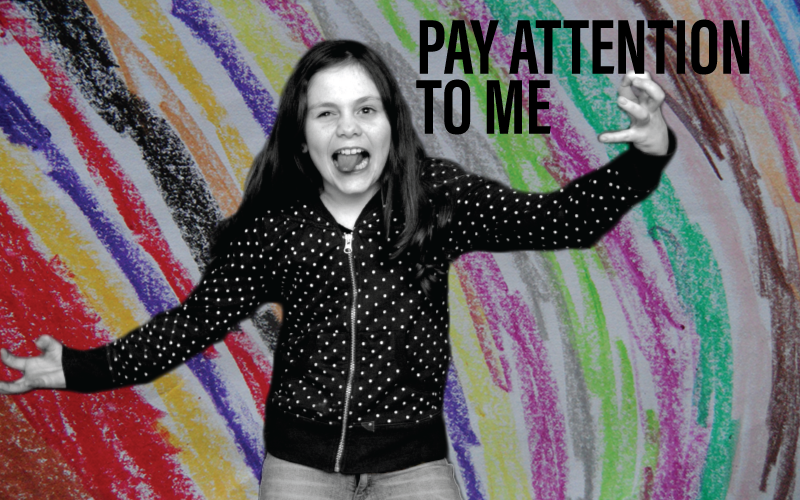
Pay Attention to Me: From Disruptive Student to Classroom Influencer!
We’re ending the Whole Child Series with a strategy that turns students who are disruptive into school or classroom leaders. Think about the students who give any teacher, veteran or not, a run for their money at every turn. The students that drain every ounce of discretionary energy from you or touch the last nerve that is keeping you upright. They are also the students who, through their force field, get other kids to go along with their shenanigans.

The FAST Method: Behavior Speaks Volumes
Children test limits, forget their good behavior, and simply misbehave. It is vital that we learn about the goal of a child’s behavior. All behavior is purposeful. We can use an intervention to meet student needs if we understand what that behavior is saying. Along with this, it is imperative we maintain a safe and welcoming environment where our students feel like they belong and can flourish as learners. Our emotions matter a lot as well. When we are interacting with students, we can sometimes feel upset, angry, challenged or provoked. Students observe our behavior and react to us.

Following Directions: One Nonverbal at a Time
Nonverbals, along with our words and the tone we use when we speak, are integral to our communication. It only takes a few moments to see nonverbals in action in our schools. When students arrive in the morning, are they smiling and making eye contact or heads down and shuffling along the hallway? If you have implemented Warm Greetings, the nonverbals may be noticeably different.

Students Ready to Learn: A Welcome that Never Wears Out
Building on the 2 x 10 strategy from this blog series, there is another super strategy you and your school staff can implement tomorrow .
The 4 x 4 strategy, or Warm Welcomes, promotes a sense of acceptance and belonging. Learn more about how the community of Tacoma, WA implemented warm greetings.

Engaged Students: What a Difference 2 Minutes and 10 Days Can Make
As we begin another school year, 2022-23 has the potential to be “normal” for the first time since 2018-19. Even prior to the Pandemic, student mental health and well-being was a concern. And for good reason: estimates suggest one in five children struggle with mental illness, with many undiagnosed. Of those who receive a diagnosis, according to the CDC, only about 20% receive care from a specialized provider. Recent data recognizes the large role public schools play in the delivery of services to students in need.
The questions we asked before embarking on this series were: “What should I be prepared for as an educator when students return on day one?” AND “What super strategies can we provide to lighten an educator’s load knowing our students are suffering and many are unlikely to receive help outside of the schoolhouse?”